Humanity as the Tenth Planetary Boundary
A Moral Limit in an Ecological Crisis
A proposal to place care, ethics and collective responsibility alongside ecological limits in the conversation about a liveable planet.
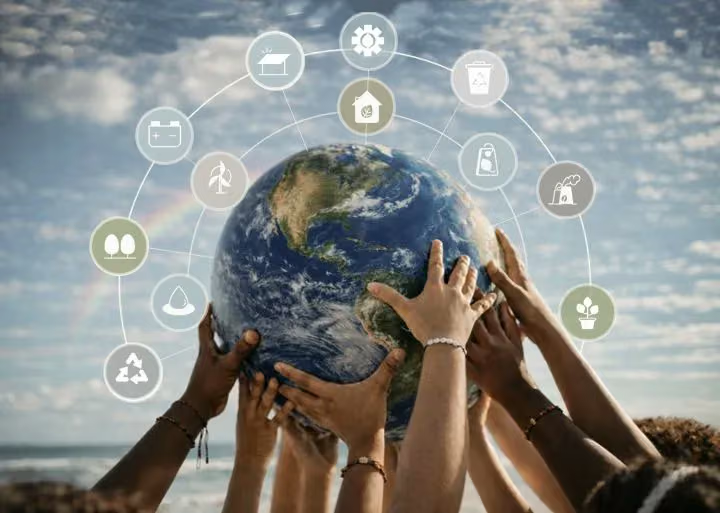
Introduction: The Boundary We Have Yet to Confront
What if the greatest threat to our planet is not climate change, not biodiversity loss, not even the crossing of planetary boundaries, but ourselves, and the diminishing presence of care, love, compassion, sense of responsibility, and tolerance in how we relate to one another, to all of life, and to the planet that sustains us?
We have built sophisticated models to measure atmospheric carbon, track nitrogen cycles, and monitor biodiversity collapse. We can map the Earth’s systems with remarkable precision. As illustrated in Figure 1, scientific research has established that there are nine planetary boundaries that define a safe operating space for humanity: climate change, biosphere integrity, land-system change, freshwater use, biogeochemical flows, ocean acidification, atmospheric aerosol loading, stratospheric ozone depletion, and novel entities (Rockström et al., 2009; Steffen et al., 2015; Richardson et al., 2023). According to the Planetary Health Check 2025, seven of the nine planetary boundaries have now been transgressed, indicating that humanity is moving further away from a safe operating space for life on Earth.
Despite this knowledge, we continue to act in ways that accelerate ecological collapse.
There is a deeper irony embedded in this reality. While we are increasingly concerned about the gradual destabilization of Earth systems, tracking emissions, regulating resources, and warning of tipping points, we continue to sustain systems of extractivism, fueled by greed, unnecessary competition, division and conflict, including the development of technologies capable of immediate, large-scale devastation. Unlike climate change, which unfolds over decades, weapons of mass destruction carry the potential for instantaneous planetary disruption. It is a troubling contradiction that the same humanity striving to remain within ecological limits continues to maintain the means to bypass them entirely. In this sense, what divides us may threaten life on Earth far more rapidly than the extractive systems we are trying to reform.
At this stage in human history, we are no longer simply a species adapting to Earth’s systems. We have become embedded within them, active agents shaping how the Earth functions. The planet is increasingly being forced to conform to our existence, rather than the other way around. The planetary boundaries framework offers us guardrails for Earth’s stability. But it remains incomplete. It tells us what limits we are crossing, but not why we continue to cross them, even when we know better.
The missing dimension is humanity itself. To meaningfully address planetary instability, we must recognize humanity, our ability to care, our ethics, values, and collective behavior, as a tenth planetary boundary because long before we exceeded ecological limits, we crossed the moral ones. And perhaps the deeper question is not whether we understand the limits of the Earth, but whether we care enough to remain within them.
From Nature’s Students to Nature’s Disruptors
Before humans began reshaping the Earth, nature dictated the terms of existence. It influenced how we built, what we ate, and how we understood the world (Santo, 2024). Early societies learned directly from natural systems, adapting to climate, using local materials, and developing survival strategies rooted in observation. This is where science itself began, from learning how nature works.
However, as human ingenuity advanced, we shifted from learning from nature to controlling it. Industrialization, urbanization, and large-scale resource extraction have fundamentally altered Earth systems. These disruptions are interconnected, creating cascading risks and feedback loops that push ecosystems toward irreversible tipping points (Steffen et al., 2018; Rockström et al., 2023).
We are no longer passive inhabitants of Earth. We are no longer students of nature.
We have become disruptors of the systems that sustain us.
What emerges from this shift is not only an ecological crisis, but a failure to remain within the limits that once guided human existence. If humanity is to operate within planetary boundaries, it must also relearn how to operate within the logic of nature itself.
A Framework That Explains Everything—Except Us
The planetary boundaries framework, first introduced by Rockström et al. (2009) and later refined (Steffen et al., 2015), is one of the most influential models in Earth system science. It translates complex environmental processes into clear thresholds, defining a “safe operating space” for humanity. However, as powerful as it is, the framework has limitations. Scholars such as Biermann and Kim (2020) argue that defining global limits is not purely scientific but inherently political. Questions arise over whose activities must change and whose risks matter most. These are questions of power, ethics and responsibility, not just data.
Similarly, Moore (2016) and Brand et al. (2021) critique the framing of environmental crisis as the result of “humanity as a whole,” rather than specific economic systems shaped by extraction and inequality. In other words, the framework explains how the Earth is destabilizing, but not fully why this process continues.
More importantly, it does not adequately confront the systems of human division that sustain both environmental degradation and the capacity for large-scale destruction. Without addressing these underlying drivers, the framework risks remaining scientifically robust but politically incomplete.
The Built Environment: Where Ecology Meets Ethics
Nowhere is this contradiction more visible than in the built environment. The construction and urban sectors account for approximately 40% of global emissions and are major drivers of resource depletion and habitat loss (Passer et al., 2020). Cities expand through material extraction, energy consumption, and land transformation, often prioritizing efficiency and cost over long-term sustainability.
In Ghanaian cities such as Accra and Kumasi, and across many African cities, for example, rapid urbanization, informal settlements, and development in flood-prone areas increase vulnerability to climate impacts. These conditions are often framed as local planning failures, but they also reflect broader planetary disruptions interacting with governance systems that do not function (Schmidt-Thomé, 2017).
For architects, building professionals and planners, this places the built environment at the intersection of ecological systems and human values.
Every material choice becomes an ecological decision. Every urban plan becomes a moral one.
The proliferation of novel entities, including plastics, chemicals, and synthetic materials, further illustrates this tension. Despite clear evidence of their environmental risks, innovation often continues to prioritize performance and profit over ecological safety (Richardson et al., 2023).
When Humanity Becomes the Boundary
The planetary boundaries define ecological thresholds. However, they do not define the human thresholds that determine whether those ecological limits are respected. Humanity itself should be recognized as a planetary boundary, an intangible but critical limit that operates alongside the existing nine. Just as climate change or biosphere integrity define the biophysical conditions for Earth system stability, the humanity boundary could define the ethical and behavioral conditions under which those limits can be maintained.
This boundary could represent the point beyond which human actions, driven by greed, conflict, inequality, or short-term interests, begin to systematically undermine both social stability and Earth system resilience. When this boundary is respected, human systems could align more closely with ecological stability. Governance structures could reinforce cooperation, as resource use becomes more equitable, and long-term planetary stewardship becomes possible. When transgressed, the consequences become both social and environmental, manifesting in exploitation, conflict, systemic inequality, and accelerated ecological degradation.
For this boundary to function alongside the existing planetary boundaries, it must be measurable. This could be achieved through what may be termed the Humanity Boundary Index (HBI), a framework designed to assess whether human systems operate within the ethical and cooperative limits necessary for planetary stability. The HBI should not have to introduce entirely new systems. Instead, it could build on existing global indicators that already measure aspects of human behavior, governance, and development. Its contribution could lie in integration, connecting these fragmented measures into a coherent signal of whether humanity is operating within a safe and just space. The index could be structured around three interdependent dimensions (See Figure 4).
The first could examine equity and justice, including disparities in wealth, carbon emissions, and environmental burden. While the second evaluates conflict and peace, including the prevalence of conflict, levels of militarization, and the allocation of resources toward cooperation or destruction. The third could assess responsibility and governance, including compliance with global agreements, institutional transparency, and the capacity of systems to act in the collective interest.
Together, these dimensions could provide a measurable basis for understanding whether humanity is operating within its own limits. They could reveal not only what is happening to the planet, but how human systems are shaping those outcomes. A practical starting point for operationalizing this framework could be found in the United Nations Sustainable Development Goals (SDGs) which already provide a globally recognized set of indicators addressing poverty, inequality, governance, and cooperation.
As a case study, these demonstrate how aspects of the humanity boundary are already being measured, even if not explicitly framed as such. Integrating the Humanity Boundary Index with SDG metrics could therefore offer a structured and scalable approach to assessing whether human systems are operating within ethical and cooperative limits at both national and global levels.
In this sense, the humanity boundary would not sit outside the planetary boundaries framework but alongside it, regularly assessed, debated, and acted upon within the same scientific and policy arenas that monitor climate change, biodiversity loss, and other Earth system processes.
Planetary Boundaries as Boundaries of Justice
Placing humanity within the planetary boundaries’ framework reveals a fundamental insight: ecological limits are inseparable from questions of justice. The concept of safe and just Earth system boundaries by Rockström et al. (2023), makes this relationship clear by demonstrating that planetary stability cannot be achieved without fairness, equity, and attention to human well-being. Environmental sustainability, in this sense, is not only a scientific or technical challenge but also an ethical one.
Current global conditions illustrate the depth of this imbalance. The Global North, which has contributed the majority of historical greenhouse gas emissions (see Figure 7), often experiences fewer immediate consequences of environmental degradation than the Global South (Jonas et al, 2025). In contrast, Africa contributes less than 4 percent of global emissions yet faces some of the most severe climate impacts according to UNEP (2022). These disparities are not incidental; they reflect structural inequalities embedded within global economic and political systems.
It is also important to recognize that many of the countries responsible for the highest levels of carbon emissions are the same ones that possess and control weapons of mass destruction, systems whose consequences extend far beyond national borders, yet the justification of their existence remain outside the opinions of much of the global population despite the shared risk.
Such inequalities indicate that ecological crises cannot be understood solely as environmental phenomena. They are also manifestations of humanity operating beyond its ethical limits. When the burdens and benefits of development are unevenly distributed, the resulting pressures on planetary systems are intensified and sustained.
Scholars such as Aleinikoff and Owen (2022) emphasize that these imbalances generate clear responsibilities, including the need for climate adaptation support and protection for environmentally displaced populations. Similarly, degrowth perspectives (Kronenberg et al., 2024) call for structural changes within high-consumption economies, arguing that continued expansion in resource use undermines both ecological stability and social equity.
Without addressing these underlying inequalities, the planetary boundaries framework risks functioning as a set of technical thresholds without moral direction. It may define limits, but it does not, on its own, ensure that those limits are respected in ways that are fair or just.
Incorporating humanity as a planetary boundary reframes this limitation. It will introduce an ethical dimension that connects ecological stability with responsibility, accountability, and equity. Under this perspective, planetary boundaries would no longer only constraints imposed by Earth systems but also become reflections of how humanity chooses to organize itself within those limits. In this way, planetary boundaries can be understood not only as limits of the Earth, but as limits of justice.
If these inequalities reveal the failure of humanity to operate within its limits, then the question becomes how such a boundary can be measured and addressed in practice.
Integration and Accountability
One of the strengths of the Humanity Boundary Index is that it will not require reinventing global governance but rather reinterpreting and connecting what already exists. The data is already available, and the institutions are already in place, including United Nations reporting systems, climate governance frameworks such as the UNFCCC, World Bank development indicators, and international justice and human rights institutions.
These systems monitor important aspects of human activity, but they operate largely in isolation. The HBI could bring them together, transforming fragmented observations into a unified measure of whether humanity is operating within safe and just limits. However, measurement alone is not enough. For the humanity boundary to hold meaning, it must be enforceable and applied universally.
At present, global accountability is often shaped by power. Some nations are scrutinized more than others, and some rules are enforced while others are negotiated. The humanity boundary would have to challenge these imbalances by calling for collective accountability, where crossing the boundary is recognized as a shared risk and addressed accordingly.
A boundary that cannot be enforced is not a boundary. It is a warning that has been acknowledged but not acted upon.
Conclusion: The Choice That Defines Our Future
History provides clear evidence of repeated transgressions of our humanity boundary and how it affects the planet’s systems. Slavery, colonization, world wars, modern-day conflicts and ongoing resource exploitation are not only moral failures but systemic breaches that have reshaped ecosystems, intensified resource extraction, and entrenched global inequalities.
This suggests that ecological crises are not simply technical failures. They are failures of humanity operating beyond its own limits.
The planetary boundaries framework has provided a powerful scientific language for understanding the limits of the Earth system. However, scientific knowledge alone cannot ensure that those limits are respected. The most critical boundary is not one measured in parts per million or gigatons of carbon but the boundary between what humanity is capable of doing and what it chooses to do.
The introduction of the Humanity Boundary Index could reframe planetary stability as both a scientific and ethical condition. It could recognize that humanity is no longer external to Earth systems but embedded within them.
The question, therefore, is no longer whether the limits of the Earth are understood, but whether humanity is willing to remain within them. If the humanity boundary were measured against the realities of our world today, could we truly say that we are operating within its safe space?
In the end, the future of the planet will not be determined by data alone.
It will be determined by whether humanity chooses to act with responsibility, to pursue justice, and ultimately, to heal the world and make it a better place for all!
References
- Aleinikoff, T. A., & Owen, D. (2022). Refugee protection:‘Here’or ‘there’?. Migration Studies, 10(3), 464-483. https://doi.org/10.1093/migration/mnac002
- Biermann, F., & Kim, R. E. (2020). The boundaries of the planetary boundary framework: a critical appraisal of approaches to define a “safe operating space” for humanity. Annual Review of Environment and Resources, 45(1), 497-521. https://doi.org/10.1146/annurev-environ-012320-080337
- Brand, U., Muraca, B., Pineault, É., Sahakian, M., Schaffartzik, A., Novy, A., ... & Görg, C. (2021). From planetary to societal boundaries: an argument for collectively defined self-limitation. Sustainability: science, practice and policy, 17(1), 264-291. https://doi.org/10.1080/15487733.2021.1940754
- Jones, Matthew W., Glen P. Peters, Thomas Gasser, Robbie M. Andrew, Clemens Schwingshackl, Johannes Gütschow, Richard A. Houghton, Pierre Friedlingstein, Julia Pongratz, and Corinne Le Quéré. “National Contributions to Climate Change Due to Historical Emissions of Carbon Dioxide, Methane and Nitrous Oxide”. Scientific Data. Zenodo, November 13, 2025. https://doi.org/10.5281/zenodo.16640595.
- Kronenberg, J., Andersson, E., Elmqvist, T., Łaszkiewicz, E., Xue, J., & Khmara, Y. (2024). Cities, planetary boundaries, and degrowth. The lancet planetary health, 8(4), e234-e241. http://dx.doi.org/10.1016/S2542-5196(24)00025-1
- Moore, J. W. (Ed.). (2016). Anthropocene or capitalocene?: Nature, history, and the crisis of capitalism. PM press.
- Passer, A., Lützkendorf, T., Habert, G., Kromp-Kolb, H., Monsberger, M., Eder, M., & Truger, B. (2020). Sustainable built environment: transition towards a net zero carbon-built environment. The international journal of life cycle assessment, 25(6), 1160-1167. https://doi.org/10.1007/s11367-020-01754-4
- Rockström, J., Gupta, J., Qin, D., Lade, S. J., Abrams, J. F., Andersen, L. S., ... & Zhang, X. (2023). Safe and just Earth system boundaries. Nature, 619(7968), 102-111 https://doi.org/10.1038/s41586-023-06083-8
- Rockström, J., Steffen, W., Noone, K., Persson, Å., Chapin III, F. S., Lambin, E., ... & Foley, J. (2009). Planetary boundaries: exploring the safe operating space for humanity. Ecology and society, 14(2). https://www.jstor.org/stable/26268316
- Steffen, W., Richardson, K., Rockström, J., Cornell, S. E., Fetzer, I., Bennett, E. M., ... & Sörlin, S. (2015). Planetary boundaries: Guiding human development on a changing planet. science, 347(6223), 1259855. https://doi.org/10.1126/science.1259855
- Steffen, W., Rockström, J., Richardson, K., Lenton, T. M., Folke, C., Liverman, D., ... & Schellnhuber, H. J. (2018). Trajectories of the Earth System in the Anthropocene. Proceedings of the national academy of sciences, 115(33), 8252-8259. https://doi.org/10.1073/pnas.1810141115
- United Nations Environment Programme (UNEP). (2022). Emissions Gap Report 2022: The Closing Window. https://www.unep.org/resources/emissions-gap-report-2022
Beyond the Built / Essay 03
Written by Michael Mawuena Baccah. Originally published by The Archinsight / TAI Publishing House.