Why Universal Internet Access Must Be Africa’s Highest Priority
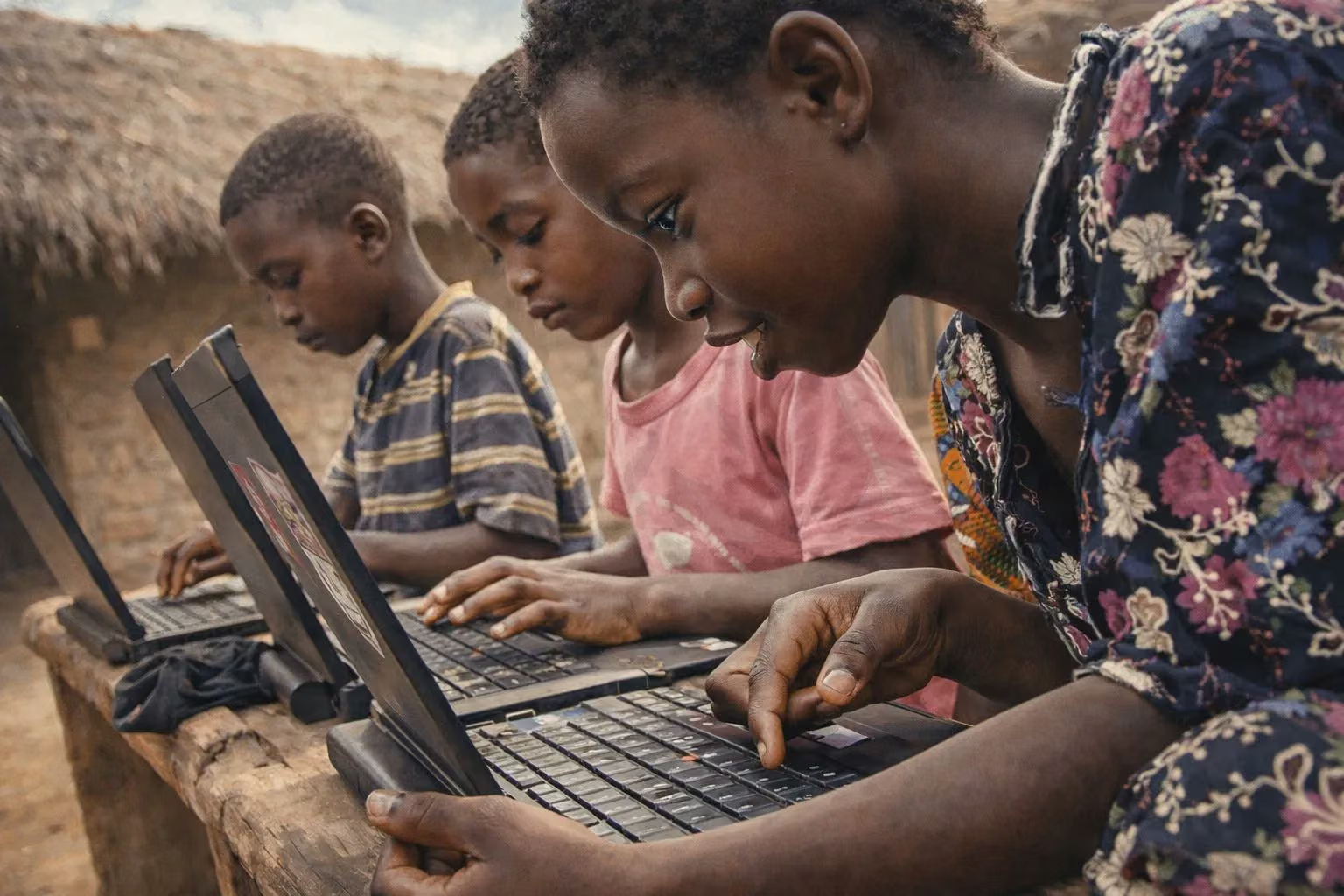
Internet access as the infrastructure of collaboration, learning and opportunity, especially for rural and marginalised communities across Africa.
Introduction: The Evolution of Human Collaboration
Human civilization has always been built on collaboration. From the earliest communities to modern nation states, progress has depended on the exchange of knowledge between people from different cultures, backgrounds, and regions. Throughout history, societies have developed systems that make this exchange possible. Cities brought people into close proximity. Writing and books preserved knowledge across generations. Transportation and communication networks allowed ideas to travel across continents.
In the earliest stages of human society, collaboration occurred within small communities. As these communities expanded, they gave birth to cities, dense spaces where people from diverse backgrounds could live close to one another, exchange ideas, share skills, and build institutions. Cities accelerated innovation because proximity made collaboration easier.
Alongside the growth of cities came another crucial development, the ability to record knowledge. Writing allowed information to outlive the individuals who created it. Centuries later, the invention of the printing press transformed the scale at which knowledge could travel. Books and manuscripts could now be reproduced and distributed widely. Ideas that once existed only in a few places could circulate across societies and continents.
Yet even with books, knowledge still moved slowly because had to be physically transported.
As societies became more interconnected, new communication systems began to accelerate the movement of information even further. Postal networks allowed written knowledge to travel across regions. Later inventions such as the telegraph and the telephone made it possible to send messages across vast distances almost instantly. For the first time in human history, information could travel faster than people.
These communication networks dramatically expanded the speed at which ideas, news, and knowledge could circulate across societies.
At the same time, societies developed more advanced methods of transportation such as roads, ships, railways, and eventually airplanes. Collaboration expanded beyond the boundaries of individual cities. People could now travel to distant regions, encounter new cultures, and exchange knowledge across societies.
Agricultural practices spread across continents. Languages, religions, literature, and technologies traveled with people. Trade routes became corridors of knowledge. Over time, these networks of exchange helped shape civilizations and eventually led to the formation of modern nation states.
Then came the Industrial Revolution, which dramatically accelerated connectivity. New transportation systems and global trade networks shrank distances between societies. Exploration expanded human knowledge of the world, though it also brought exploitation and colonial domination that reshaped global power structures.
As cities grew larger and transportation and communication networks expanded, the world gradually became more interconnected. Collaboration increased as people and information could move more easily between regions and continents.
And then something extraordinary happened. The internet arrived, ushering in a new era: the Information Age!
The Internet: A New Kind of Infrastructure
The internet fundamentally transformed how humans collaborate.
For most of human history, collaboration depended on physical proximity. People needed to travel to meet, study, trade, or exchange ideas. Even when transportation improved, knowledge exchange still required time, resources, and mobility.
Today, communities no longer need to be defined by geography. Communities can now exist virtually. People from different continents can collaborate, learn, build projects, and exchange ideas without ever meeting physically.
In this abstract digital world, certain forms of inequality may persist, such as unequal access to technology, differences in digital literacy, and algorithmic biases that shape what information people see. However, the internet simultaneously creates new forms of equality. In many online spaces, what matters less is who you are or where you come from and more what ideas you contribute.
A student in a small village can access the same knowledge as a student in a major global city through the World Wide Web.
Knowledge that was once concentrated in elite institutions in the developed countries is now increasingly accessible to anyone with an internet connection. Even more importantly, digital knowledge can now be compared easily across multiple sources. Ideas can be challenged, debated, and refined in ways that were far more difficult when information existed mainly in isolated books or institutions.
The internet therefore does not simply accelerate communication. It transforms how knowledge itself evolves.
And with the rise of artificial intelligence (AI), the speed at which information can be analyzed, shared, and applied will accelerate even further.
But before we can benefit from AI, we must first solve a more basic problem.
We need the internet.
Africa’s Connectivity Challenge
Across Africa, physical connectivity remains limited. Many countries struggle to build the extensive infrastructure required to connect their populations through highways, rail networks, airports, and shipping systems to make development accessible to all.
These projects require enormous financial investment. For many African countries, the cost of building and maintaining such infrastructure across vast territories is extremely high. As a result, regions within the same country, and sometimes communities only a few kilometers apart, remain poorly connected.
When connectivity is limited, collaboration suffers. When collaboration suffers, innovation slows. However, while building large transportation systems may take decades, another form of infrastructure already exists. Digital connectivity. The foundation of global internet infrastructure has largely been built. Undersea cables connect continents. Satellite networks are expanding rapidly. Fiber networks continue to grow across major urban areas.
The challenge now is reaching the margins of our societies. Across Africa there are still villages, communities, and entire regions that remain disconnected from the digital world. Even where infrastructure exists, internet access is often too expensive for many households to afford. As a result, millions of people are excluded from the greatest knowledge sharing system humanity has ever created.
The Untapped Educational Power of the Internet
The greatest potential of the internet is not entertainment. It is education and collaboration. Usually, when people traveled to other societies, the primary purpose was often learning, trade, or innovation, while leisure constituted only a small portion of the experience. Today, the internet allows us to do something unprecedented: to learn from the greatest minds in the world without the need for physical movement. Yet, despite this immense potential, the internet is predominantly used for entertainment and leisure. This is not because its educational value is limited, but because entertainment is more immediately accessible, emotionally engaging, and requires less structure or guidance.
For many users, especially those encountering the internet without prior orientation, platforms designed for passive consumption often become the first point of interaction. Additionally, digital systems and algorithms tend to prioritize content that captures attention rather than content that builds knowledge, reinforcing patterns of consumption over learning. The challenge, therefore, is not the internet itself, but how it is introduced, guided, and embedded within educational and social systems.
A student regardless of background or age can now access discourses from professors at leading universities and engage with knowledge shared by experts in engineering, architecture, programming, geopolitics, history, medicine, and countless other fields. This shift is particularly significant for regions like Africa, where access to high-quality educational resources has been limited for centuries.
The expansion of information and communication technologies (ICT) across Africa, so far, has demonstrated strong potential to improve access to educational resources, enhance teaching quality, and support both formal and informal learning environments. For instance, mobile learning platforms and digital content delivery systems have enabled access to low-cost teaching materials and created new opportunities for teacher training and learner-centered education .
Beyond access, the internet fundamentally changes how knowledge itself is produced and refined. Digital information can now be compared across multiple sources in real time. Ideas can be challenged, debated, and improved in ways that were far more difficult when knowledge existed primarily in isolated books or institutions. This interconnected knowledge ecosystem fosters critical thinking, interdisciplinary learning, and continuous intellectual evolution.
On a personal level, this transformation is deeply evident in my professional growth. My academic background is in architecture, yet through the internet I have been able to learn far beyond my formal training, from geopolitics and history to programming and artificial intelligence. During my time at university, it became common to turn to online tutorials when classroom explanations were insufficient. As we often joked, “if you do not understand it, watch an Indian tutorial.”
Despite language barriers, the clarity of visual explanations enabled understanding. In many cases, the majority of my practical and technical skills were acquired through online platforms rather than traditional classroom settings.
This experience reflects a broader reality. Just a few decades ago, such access to global knowledge was largely restricted to those in proximity to it could afford to travel abroad for education. Today, that same knowledge is available to anyone with internet access. However, this opportunity is not yet universal. Across Africa, millions of students, particularly in rural communities and marginalized urban areas, remain excluded from this global knowledge network. Ménascé & Clément (2017), in an article “How digital technology can help reinvent basic education in Africa” stated that in sub-Saharan Africa, over 32 million primary-school-age children and 25 million adolescents are still out of school, highlighting the scale of the educational access challenge.
Rethinking Education in the Digital Age
This raises a critical question: what does universal internet access mean for education?
If African governments are to prioritize infrastructure investments, one of the most transformative decisions they can make is ensuring that every school and community has access to affordable and reliable internet. The widespread adoption of mobile technologies across the continent demonstrates that digital infrastructure can scale rapidly when supported effectively. Mobile connectivity has already expanded dramatically, providing a foundation upon which educational access can be built .
Currently, many students only begin to fully utilize the internet when they reach university, often discovering too late that complex concepts can be better understood through online digital resources, as was in my case. By that stage, years of potential learning enhancement have already been lost. Instead, students should be introduced to the educational potential of the internet much earlier in their academic journey.
Concerns about the internet being distracting or harmful to young people are valid. However, these issues often arise not from access itself, but from a lack of guidance. When students encounter the internet without direction, they are more likely to use it primarily for entertainment. The solution, therefore, is not censorship alone. The solution is structured educational integration.
Students should be taught how to use the internet as a tool for learning, creativity, and collaboration. Classrooms across Africa should incorporate digital resources such as lectures, documentaries, simulations, and interactive content that complement existing curricula. When digital tools are used effectively, they can improve not only access to education but also cognitive skills and learning outcomes, particularly when students are able to engage with content beyond the classroom environment .
Imagine classrooms equipped with screens where students can access high-quality explanations of complex topics in science, engineering, history, architecture, and politics from experts around the world. Even in the most remote villages, students could gain access to world-class educational content.
In this way, the internet has the potential not to widen inequality, but to reduce it. By democratizing access to knowledge, it can create a more inclusive and equitable educational landscape across the continent.
Conclusion: Building Africa’s Digital Future
Looking further ahead, Africa must also confront a critical question of digital sovereignty and cultural representation. Today, much of the global digital ecosystem is shaped by platforms developed outside the continent. While these platforms have enabled unprecedented access and participation, they do not always reflect African realities, priorities, or narratives.
In the long term, Africa has the opportunity to develop its own digital platforms, not as instruments of isolation or censorship, but as spaces that promote African creativity, knowledge, and cultural expression. Such an effort would benefit from continental cooperation. A pan-African approach could leverage the continent’s scale, diversity, and talent to build digital ecosystems that serve local needs while amplifying African voices on the global stage. These platforms would not replace global systems, but complement them, ensuring that Africa is not only a consumer of digital content, but also a producer and shaper of it.
For centuries, physical infrastructure such as roads, railways, shipping routes, and communication networks determined which societies could collaborate, innovate, and prosper. Today, that role has shifted. The internet has become the infrastructure that connects human knowledge itself.
If Africa is to fully participate in the global exchange of ideas, innovation, and technology, then universal and equitable internet access is not optional. It is foundational. It is the bridge between potential and participation.
Across the continent, there are still communities where access to this digital infrastructure remains out of reach. Not because of a lack of intelligence, creativity, or ambition, but because the connection has not yet arrived.
Somewhere in a village, a town, or a marginalized urban neighborhood, there is a young person with the potential to contribute to science, engineering, architecture, literature, or technology. That potential does not depend on geography. It depends on access. .
The only thing standing between that young mind and collaborating in the global community is an internet connection.
When that connection arrives, it will not only provide access to knowledge, but the tools to create and solve problems.
Somewhere, in a village or a forgotten corner of a city, a young mind will write their first line of code. In that moment, they are no longer just a learner, but a participant in the global system of innovation.
Hello, World!
Beyond the Built / Essay 02
Written by Michael Mawuena Baccah. Originally published by The Archinsight / TAI Publishing House.